

the boom in grid-scale battery storage
Energy storage plays a vital role in expanding renewable power generation. It also allows operators to take advantage of market price differences by charging when electricity is cheap (or even negatively priced) and discharging when it is more valuable.
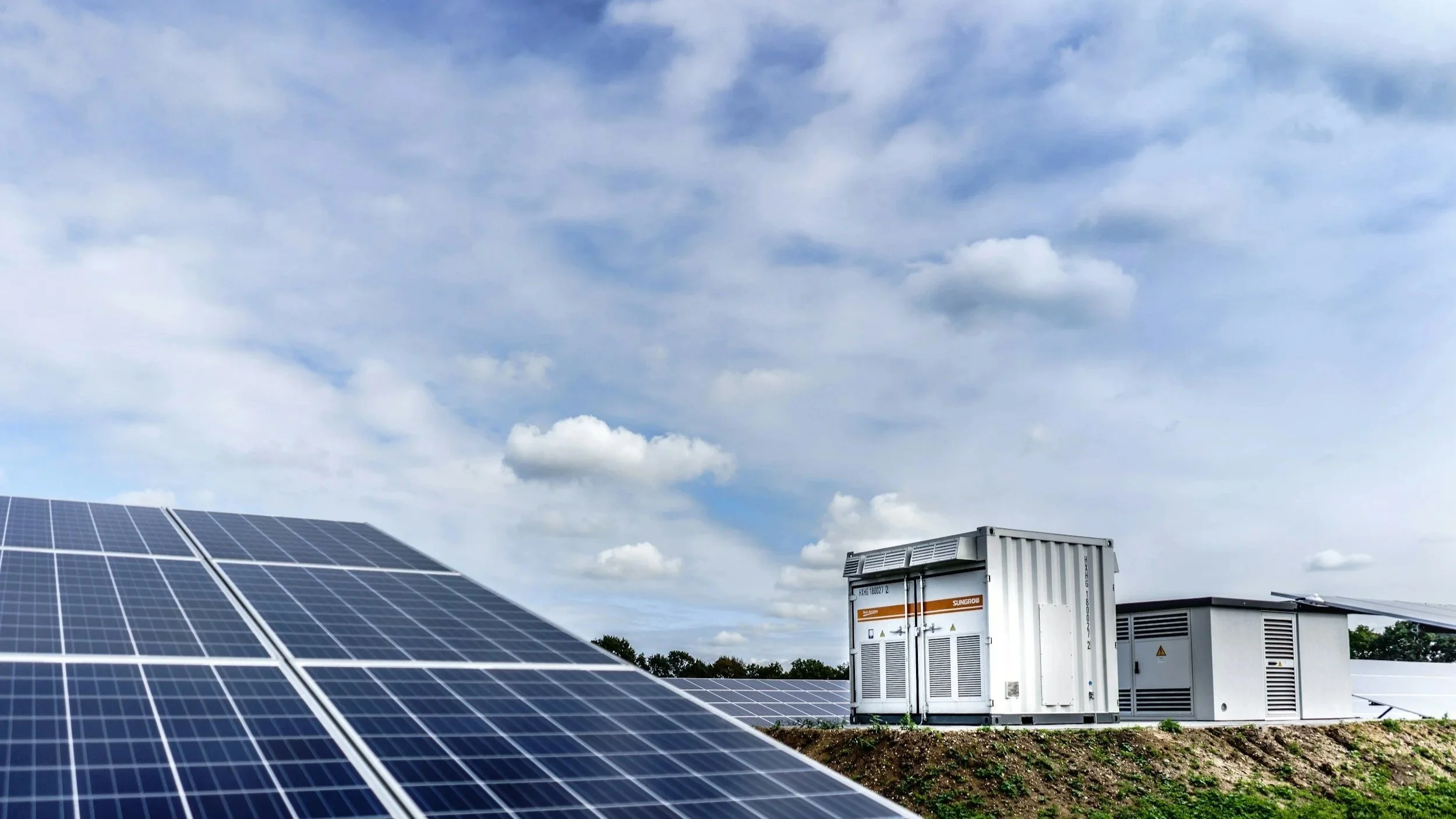
The Challenge of Intermittent Renewables
Electricity generation from sources like solar and wind often fails to match demand patterns. Solar production typically reaches its maximum around midday before dropping sharply in the late afternoon and evening, just as household and commercial demand rises. Wind output can vary unpredictably throughout the day and shows more predictable seasonal patterns.
These supply variations create difficulties when excess generation exceeds demand, often causing wholesale electricity prices to drop significantly or even turn negative.
In one notable case in the Netherlands during a sunny and windy period in May, unexpected high renewable output combined with low demand in neighboring Germany (due to a public holiday) pushed prices as low as -EUR 350 per megawatt-hour, far below the typical wholesale level of around EUR 70. Without the ability to curtail or store the power, generators face substantial financial losses.
The Rise of Negative Electricity Prices
Traditional power plants, particularly older coal or nuclear facilities, cannot easily be switched off and on quickly to match these fluctuations.
Grid-scale energy storage addresses this by absorbing surplus electricity during periods of oversupply and releasing it when the system needs it most. When prices go negative, storage operators can effectively be compensated for taking excess power off the grid and then sell it back later at higher value.
Negative pricing events have become more common across Europe as renewables account for a growing portion of electricity supply. In 2024, renewables represented about 47.5% of the EU’s gross electricity consumption. At the same time, the number of hours with negative prices in major European markets has reached record levels in recent years, highlighting the need for greater storage capacity to balance the system and support further renewable integration.
Arbitrage Opportunities in Power Markets
Price volatility in electricity markets has opened significant arbitrage possibilities for storage operators. Traders and investors are increasingly active in short-term power trading to capitalize on these swings, which in turn strengthens the business case for owning and operating battery systems.
In certain regions with supportive policies, such as parts of Canada, storage projects have delivered strong internal rates of return, sometimes reaching 20-30%, because regulators have introduced incentives to manage growing intermittency and modernize aging grids.
Balancing Revenue Streams and Risks
Energy arbitrage, buying low and selling high, typically contributes 20-50% of storage operators’ revenue today and is projected to rise toward 60% in some markets by 2030. The remaining income often comes from ancillary services that help maintain grid stability, such as frequency regulation and reserve capacity.
However, as more storage capacity is added, the spread between peak and off-peak prices is expected to narrow over time, potentially reducing arbitrage margins.
Investors also see value in combining renewable generation with storage to spread risk. Renewables generally benefit from periods of high power prices, while storage profits from price volatility itself. These assets are not perfectly correlated, providing a natural diversification effect.
Development risks also differ: renewable projects often require longer permitting processes and larger land areas, while battery storage can be deployed on smaller sites with shorter construction timelines. Co-locating storage with renewables can further improve economics by sharing grid connections and infrastructure, potentially lowering overall capital costs by more than 10% and giving operators better control over charging decisions.
Rapid Growth in Global Energy Storage
Global energy storage capacity has expanded quickly in recent years, led largely by grid-scale lithium-ion battery systems installed alongside renewable projects. Additions are expected to remain strong, with forecasts pointing to continued double-digit growth through the 2030s, though the peak annual growth rate may moderate after 2025.
This expansion has been accelerated by sharp reductions in lithium-ion battery prices, driven by economies of scale in manufacturing, a more mature global supply chain, and technological improvements that have reduced degradation rates and enabled longer warranties.
Current lithium-ion systems, which typically provide 4-6 hours of discharge duration, are well suited to handling daily fluctuations in renewable output. Longer-duration technologies will be needed to address seasonal imbalances, such as low renewable generation during dark, calm winter periods in northern Europe when heating demand is high.
Promising long-duration options include compressed air energy storage, molten salt systems and flow batteries. While these are not yet fully commercial at scale, increased deployment could drive costs down significantly, following the learning curve seen with lithium-ion technology. Focusing efforts on a smaller number of promising solutions and ramping up production is widely viewed as the most effective path to cost reduction.